The Mirror of American Society
2026
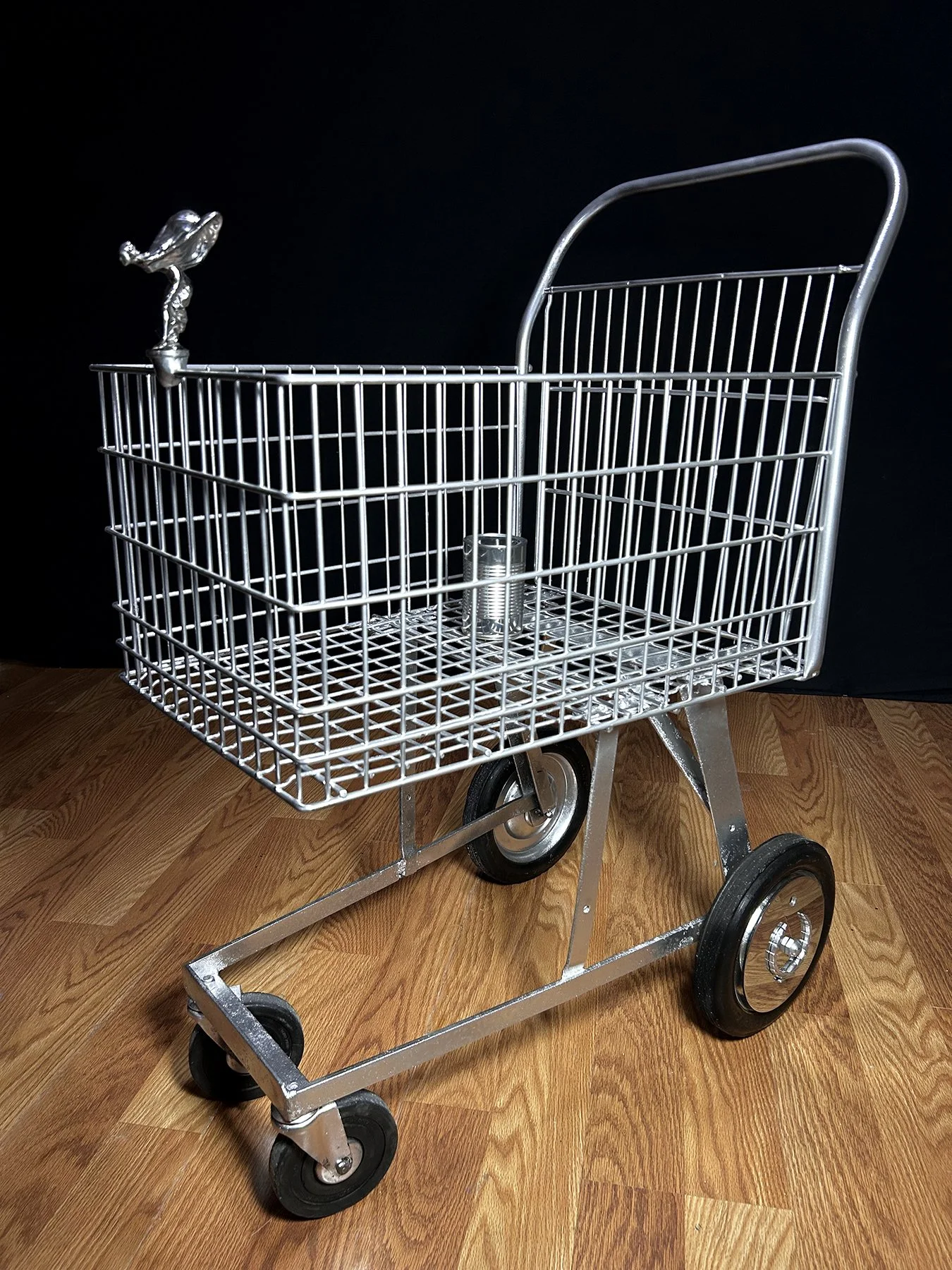
30” x 20” x 39.25”
Mixed Media
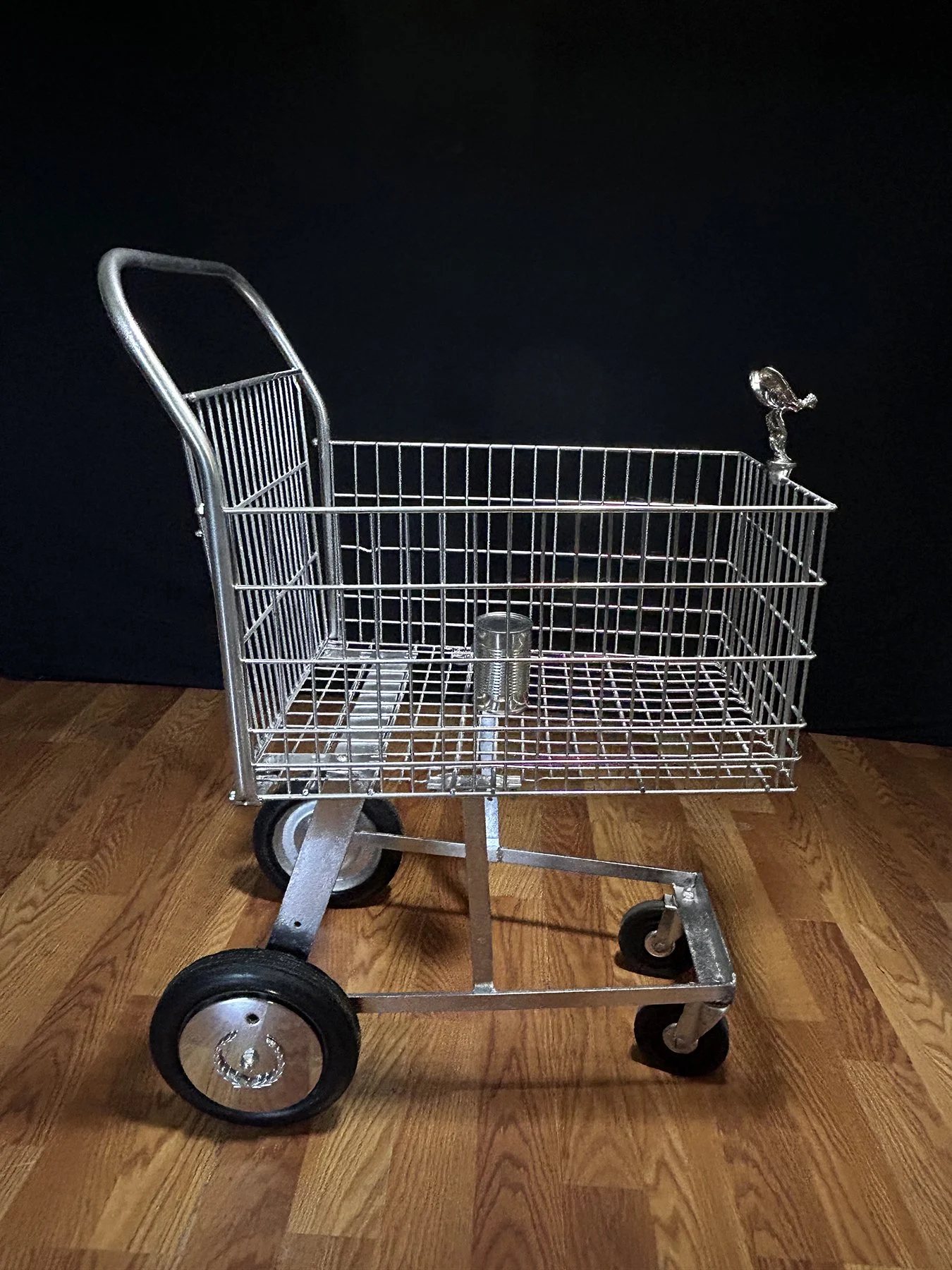
When Andy Warhol embraced the shopping cart as imagery in the 1960s, it was a deliberate provocation. The cart was everywhere: an emblem of abundance, mass production, and America’s cheerful mechanization of need and desire. It suggested that consumption was a given, that anyone could participate. “Shaping his search for new ways to mirror American society” (Revolver Gallery) Warhol portrayed us a culture overflowing with goods, and the shopping cart was its vessel. In 2026 however, that mirror reflects something far more unsettling.
Food prices in the United States are now more than 30 percent higher than they were before the pandemic, following years of sustained inflation, including an 11.4 percent spike in grocery costs in 2022 alone. The human toll is staggering: nearly 47.9 million Americans are facing hunger, including 14.1 million children. Food insecurity rarely exists in isolation. Families facing it are often also burdened by unaffordable housing, rising medical costs, stagnant wages, and the cumulative weight of systemic inequity. (FRAC - Food research and action center.)
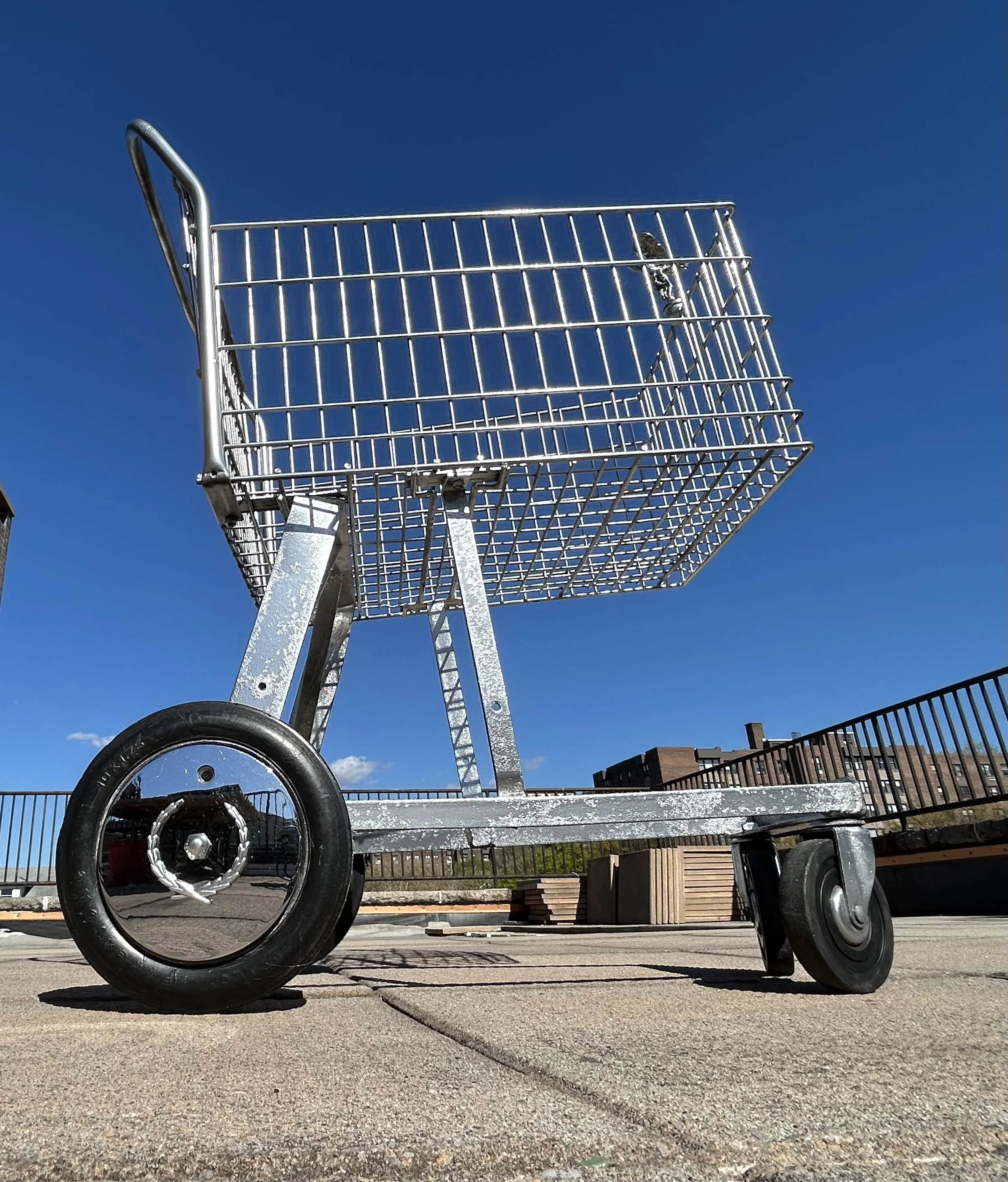
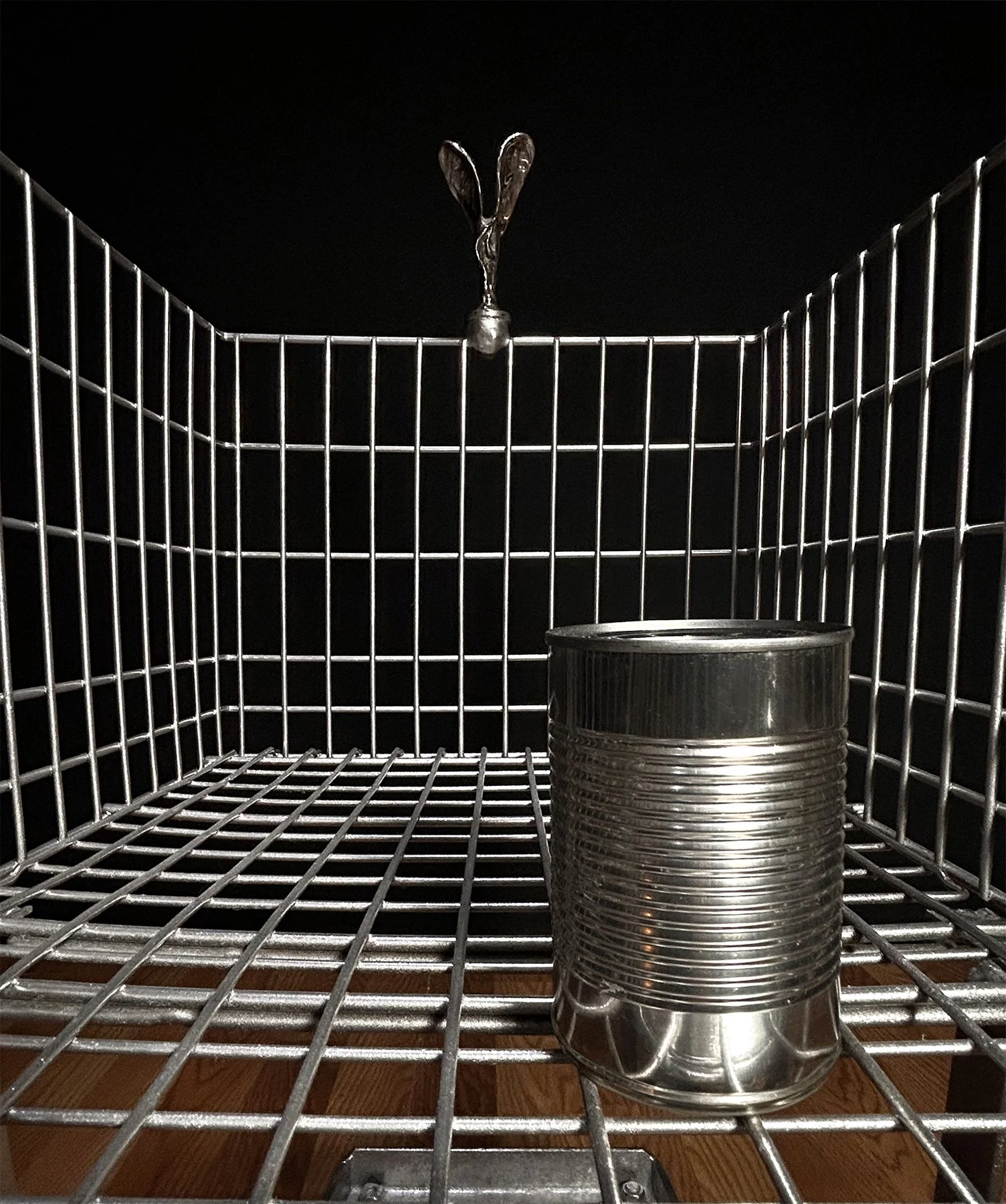
The shopping cart, once Warhol’s wry symbol of consumer abundance, has inverted its meaning. What was once ordinary is now aspirational. A full cart is no longer assumed; it has become a marker of economic privilege. The object that once symbolized mass access now quietly reveals who can and cannot afford the basic act of feeding a family.
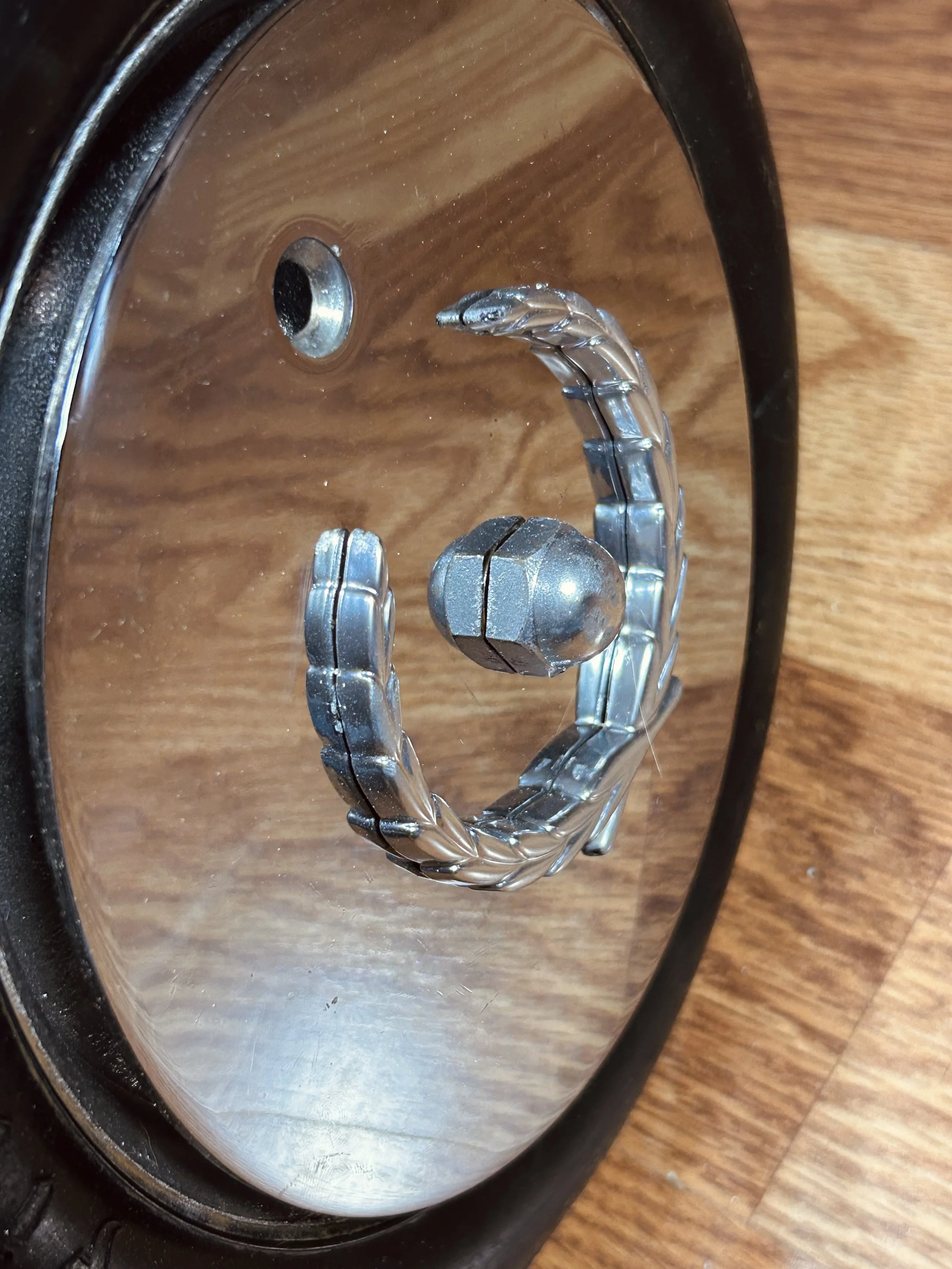
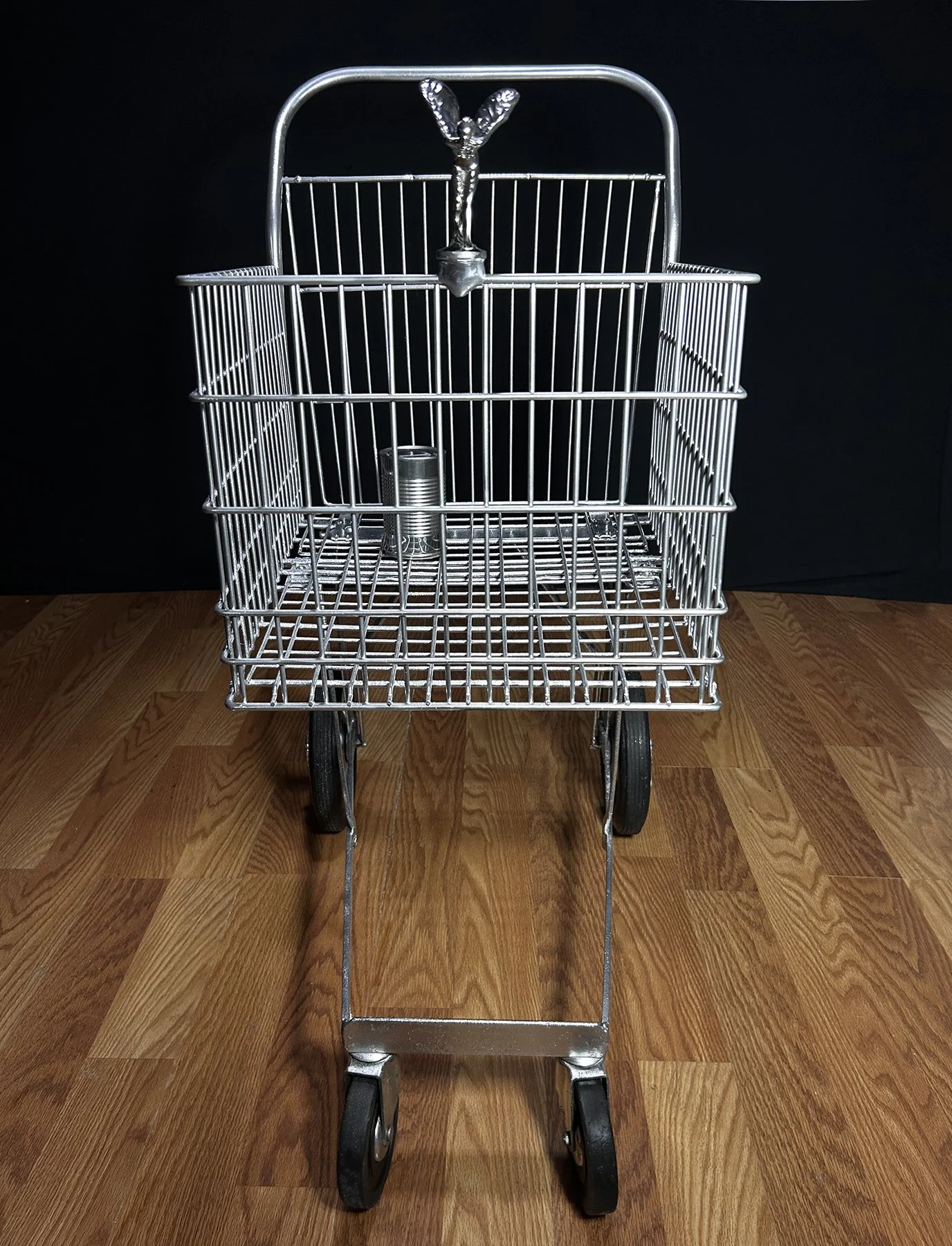
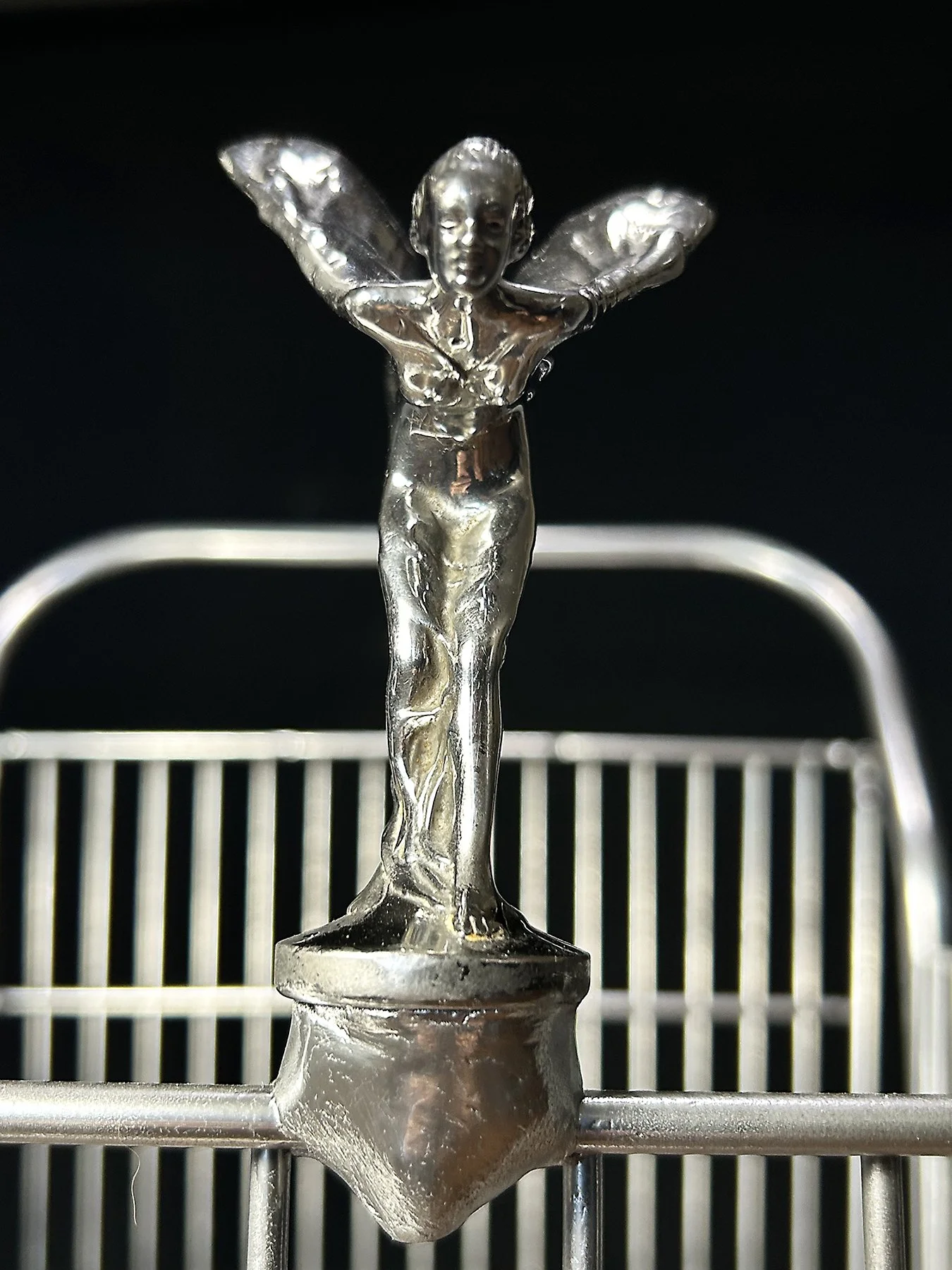
Steel, paint, rubber, vintage chrome Rolls Royce hood ornament & Chrome Cadillac wheel covers.


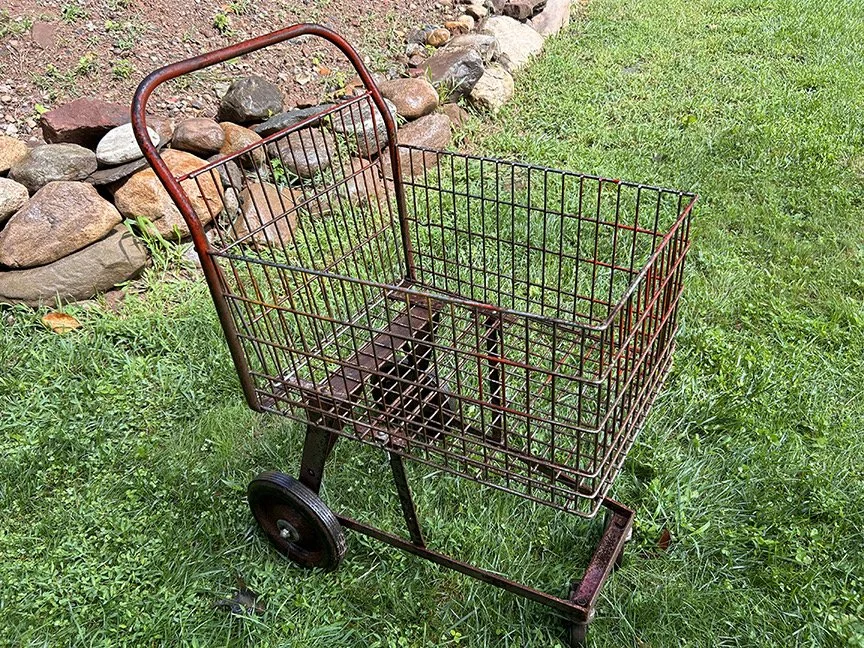
Before.